Jami‘ Sa‘d ibn Abi Waqqas
How to get here
-
By Metro: Take Guangzhou Metro Line 2 to Yuexiu Park Station. From the station, walk north along Jiefang North Road towards No. 901. The tomb complex is situated next to Lanpu Garden.
Jami‘ Sa‘d ibn Abi Waqqas
-
Jami‘ Sa‘d ibn Abi Waqqas is a historic Islamic site in Guangzhou (formerly known as Canton), China. It is traditionally associated with Hazrat Sa‘d ibn Abi Waqqas Radhiyallahu Anhu, one of the distinguished Sahabah of Nabi Muhammad ﷺ.
-
The site is particularly significant in Chinese Muslim tradition because of the historical association between Sa‘d ibn Abi Waqqas Radhiyallahu Anhu and the introduction of Islam to China.
-
Also known as: Xianxian Ancient Tomb / Tomb of the Ancient Islamic Sage / Tomb of Sa‘d ibn Abi Waqqas.
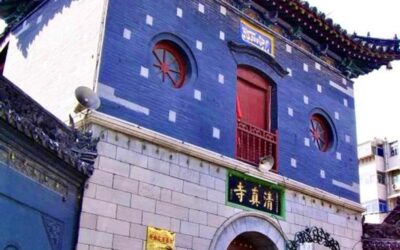
- The site is located in Yuexiu District, Guangzhou, and is also known by its Chinese name, Qingzhen Xianxian Gumu (清真先贤古墓). It is an important landmark in the history of Islam in China and is traditionally regarded by Chinese Muslims as the resting place of Hazrat Sa‘d ibn Abi Waqqas Radhiyallahu Anhu.
- Sa‘d ibn Abi Waqqas Radhiyallahu Anhu was among the distinguished companions of Nabi Muhammad ﷺ. Chinese Muslim tradition maintains that he travelled to China during the early period of Islam and played a significant role in introducing the religion to the country.
- The site includes a historic Muslim cemetery and a domed tomb traditionally associated with the Sahabi. It is surrounded by other graves and historical memorials, reflecting the long-standing Muslim presence in Guangzhou.
The story connecting Sa‘d ibn Abi Waqqas Radhiyallahu Anhu to China is an important part of Chinese Muslim heritage. However, historians have questioned whether he personally travelled to China or was buried at this location. The earliest surviving historical evidence identifying him with the Guangzhou burial site is considerably later than the period in which he lived. The attribution should therefore be understood as a respected local Muslim tradition rather than an independently established historical fact.
The tomb remains an important destination for Muslims visiting Guangzhou, particularly those interested in the history of Islam along China’s ancient maritime trade routes.