Shah Jahan Musjid
How to get here
-
By train: Travel to Woking Railway Station. From there, the Musjid is approximately a 15-minute walk.
-
By bus: Bus routes 437, 446, 456 and 462 serve the area.
-
By car: Enter 149 Oriental Road, Woking, GU22 7BA into your navigation system. On-site parking is available.
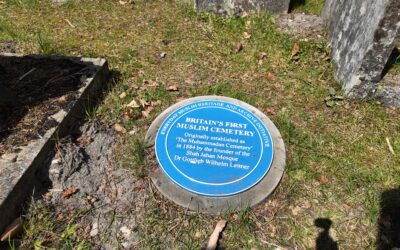
- Shah Jahan Musjid, also known as Woking Musjid, is one of the most historically significant Islamic sites in the United Kingdom. Situated on Oriental Road in Woking, Surrey, it holds an important place in the history of Islam in Britain as the country’s first purpose-built Musjid. Its construction began in 1888 and was completed in 1889 CE.
The Musjid was commissioned by Dr Gottlieb Wilhelm Leitner, a Hungarian-born scholar of Oriental languages and Islamic studies who established the Oriental Institute in Woking. He envisioned a place of worship for Muslim students and visitors, as well as a centre that would encourage the study and understanding of Islam. - The building was designed by English architect William Isaac Chambers in a distinctive late-Mughal architectural style. Its design incorporates a prominent dome, decorative entrance, minarets, ornamental detailing and traditional Islamic architectural features. The interior includes a beautifully designed prayer area, with a Mihrab indicating the direction of the Qiblah towards Makkah.
- The Musjid was named in honour of Shah Jahan Begum, the ruler of Bhopal in India, who provided financial assistance towards its construction. Her contribution helped make the establishment of this historic Islamic institution possible.
- Following the death of Dr Leitner in 1899, the Musjid gradually fell into disuse. Its revival came in the early twentieth century through the efforts of Khwaja Kamal-ud-Din, an Indian Muslim scholar who established the Woking Muslim Mission in 1913. The Musjid subsequently became an influential centre for Islamic scholarship, publications and the propagation of Islam in Britain.
Several prominent Muslim personalities became associated with the Woking Muslim Mission, including:Khwaja Kamal-ud-Din: The founder of the Woking Muslim Mission, who played a major role in reviving the Musjid.
Marmaduke Pickthall: A prominent British Muslim who later became renowned for his English translation of the Qur’an.
Lord Headley: A British Muslim convert who became an influential figure in the development of Islam in Britain.
During the early twentieth century, the Musjid attracted Muslim scholars, visitors and important personalities from different parts of the world. It became an important meeting place for the growing Muslim community and contributed significantly to the establishment of Islam in Britain.In recognition of its exceptional architectural and historical importance, Shah Jahan Musjid was awarded Grade I listed status. It remains a functioning place of worship and an important heritage landmark, preserving the story of the early Muslim presence in Britain.