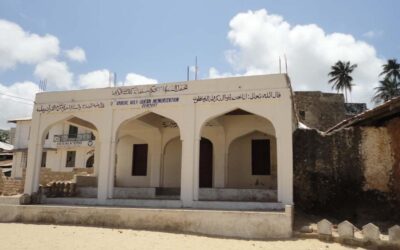
Jumuah Musjid – Lamu
How to get here:
The Musjid is situated within Lamu Old Town, where most streets are narrow and best explored on foot.
-
From Lamu Old Town Jetty: Walk into the historic town towards the Kitendetini area.
-
By foot: Use the Google Maps pin to navigate through the narrow streets.
-
By boat: Visitors arriving from Manda Island can take a boat to Lamu Town Jetty before continuing on foot.
-
Jumuah Musjid, also known as Jumaa Musjid or the Friday Musjid, is situated in Lamu Old Town on Lamu Island, along the northern coast of Kenya. It is among the historic Islamic places of worship associated with the island’s long-standing Muslim community. Lamu developed into an important centre of Islamic scholarship, trade and religious life along the East African coast.
-
The historic Friday Musjid is reported to date back to 1511, making it one of the oldest known Islamic places of worship in Lamu. Its history reflects the early establishment and growth of Islam in the Swahili coastal settlements, which maintained close connections with Arabia, Persia and the Indian subcontinent through maritime trade.
-
Lamu became an important trading port where merchants, scholars and travellers from different parts of the Indian Ocean world gathered. These connections contributed to the development of a distinctive Swahili Muslim culture, combining local traditions with influences from the wider Islamic world.
-
The Musjid has served the local community as a place for congregational Salah, particularly Jumu’ah prayers. Its historical significance is connected to Lamu’s wider role as a centre of Islamic education and religious gatherings.
The surrounding Old Town is renowned for its traditional Swahili architecture, featuring coral-stone buildings, mangrove timber construction, narrow winding streets and beautifully carved wooden doors. These architectural traditions reflect centuries of cultural exchange between African, Arab, Persian and Indian communities. -
Lamu Old Town was inscribed on the UNESCO World Heritage List in 2001 in recognition of its outstanding cultural and architectural heritage.
-
The town continues to preserve its longstanding Islamic traditions and remains an important centre of Swahili Muslim culture in East Africa.