Tomb of Hazrat Ukasha
How to get here:
The Tomb of Hazrat Ukasha (Radhiyallahu Anhu) is in Balkh, approximately 20–25 km from Mazar-i-Sharif, in northern Afghanistan.
The most practical approach is to travel from Mazar-i-Sharif to the historic city of Balkh and then continue by local taxi to the shrine.
-
Ukasha ibn Mihsan al-Asadi (Radhiyallahu Anhu) was a noble Companion (Sahabi) of Nabi Muhammad (Sallallahu Alayhi Wasallam). He is remembered among the early Muslims for his faith, courage and devotion to Islam. His name is associated with the historic shrine of Khwaja Akkasha, also known as the Tomb of Hazrat Akasha, situated in the ancient city of Balkh in northern Afghanistan.
-
The shrine is located in the northeastern part of the old city of Balkh, near one of its historic gates.
-
Historical architectural research records that the shrine was restored during the reign of the Shibanid ruler Abd al-Mo’men Khan, around 1597–1598 CE (1005 AH).
-
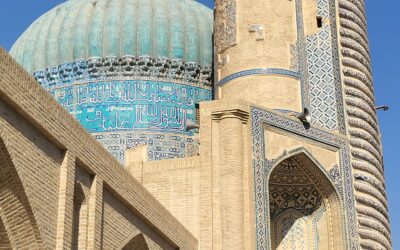
Although the building is traditionally attributed to the Timurid period, its precise architectural origins remain uncertain. Research suggests that Abd al-Mo’men Khan may have undertaken substantial restoration or even reconstruction.
-
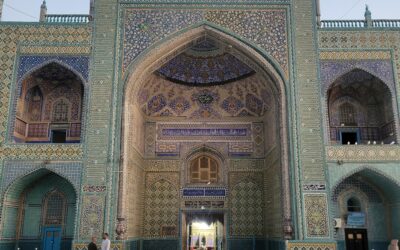
The shrine originally consisted of an entrance pavilion (iwan), an open courtyard with semi-octagonal recesses and a domed chamber with a cruciform interior.
-
Historical photographs from the 1930s document the building’s earlier appearance. By then, the dome had collapsed and the front portion of the courtyard had disappeared.
-
The site remains identified on modern maps as the Tomb of Hazrat Akasha and forms part of the historic religious landscape of Balkh.
It is important to distinguish the local religious attribution from independently established history: the shrine’s association with Khwaja Akkasha is documented, but independent historical evidence confirming that the grave contains the remains of the Sahabi Ukasha ibn Mihsan (Radhiyallahu Anhu) has not been established.
-