Bab Faraj
How to Get Here:
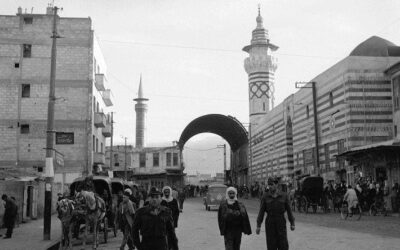
Bab al-Faraj is situated near the northeastern corner of the Damascus Citadel. From the Umayyad Musjid, walk north towards the citadel and continue towards the Manakhiliyya market. The gate is incorporated into the market passage near King Faisal Street.
Bab Faraj
- Bab al-Faraj, meaning the Gate of Deliverance or Gate of Relief, is a historic gateway on the northern side of the Old City of Damascus, Syria. It is situated near the northeastern corner of the Damascus Citadel, between the historic Amara and Manakhiliyya quarters. Unlike most of the ancient gates of Damascus, which originated during the Roman period, Bab al-Faraj was opened during the Islamic era and is traditionally regarded as one of the later additions to the city’s original defensive wall.
- The gate was established during the reign of Nur al-Din Mahmud ibn Zangi, following his capture of Damascus in 549 AH (1154 CE). As part of his wider programme to strengthen the city’s defences and develop its infrastructure, Nur al-Din extended and reinforced sections of the northern city wall. The new gateway provided an additional entrance to the city near the citadel and the Barada River.
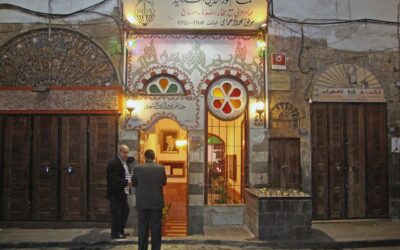
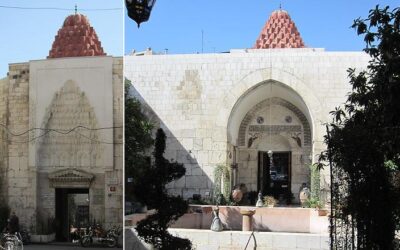
- Bab al-Faraj was subsequently expanded and fortified during the Ayyubid period. In 639 AH (1242 CE), the Ayyubid ruler al-Malik al-Salih Imad al-Din Ismail ordered major reconstruction of the gate and its adjoining defensive works. An Arabic inscription above the gateway records this restoration and identifies the ruler responsible. The reconstruction incorporated a second entrance to the north, creating the distinctive double-gateway arrangement that survives today.
- The two gateways were connected by a narrow passage running between the inner and outer sections of the fortification. This arrangement strengthened the entrance and made it more difficult for hostile forces to pass directly into the city. The surrounding structure also incorporated defensive features and buildings associated with the city’s water system, including a fortified mill beside the Barada River.
- During the Mamluk period, Bab al-Faraj underwent further rebuilding and restoration, particularly in 1396–1397 CE. Additional repairs were carried out in modern times, including restoration work during the 1980s. Despite these changes, important elements of the original medieval gateway remain visible, including sections of its stonework and the architectural details of the earlier entrance.
The gate has also been known by other names throughout its history. During the Ottoman period, it was called Bab al-Bawabijiyya, a name associated with shoemakers who traded in the surrounding area. It later became known as Bab al-Manakhiliyya, after the nearby market. These names reflect the commercial development of the neighbourhood and the important role the gateway played in the daily life of Damascus. - Today, Bab al-Faraj remains an important historical landmark near the Damascus Citadel. The passage continues to serve as part of the local market, with small shops and businesses occupying the surrounding structures. Visitors can still walk through the historic double gateway and observe the medieval stonework, including the Arabic inscription commemorating its Ayyubid reconstruction. The site provides an important reminder of Nur al-Din’s contribution to the fortification and development of Damascus during the 12th century.