Hammam Nur al-Din
How to Get Here:
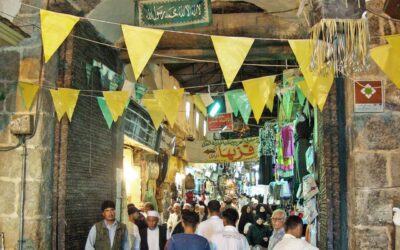
The hammam is situated inside the Bzouriyah Souq, close to Khan As’ad Pasha and south of the Umayyad Musjid. Its entrance opens directly onto the market. From the Umayyad Musjid, walk towards the spice market and follow the signs or ask local traders for Hammam Nur al-Din.
-
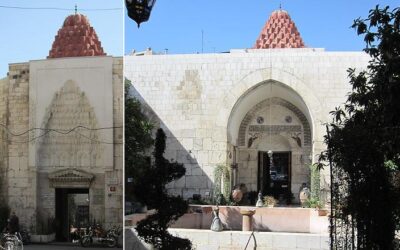
Hammam Nur al-Din, also known as Hammam al-Bzouriyyeh, is one of the oldest surviving traditional public bathhouses in Damascus, Syria.
-
Located within the historic Bzouriyah Souq in the Old City, this remarkable establishment dates back to the 12th century and is attributed to the celebrated Muslim ruler Nur al-Din Mahmud ibn Zangi, who governed Damascus from 1154 until his death in 1174.
The hammam formed part of Nur al-Din’s wider programme of religious, charitable and public works in Damascus. It was established as a revenue-generating property for a Waqf, or charitable endowment, which helped support the nearby Nur al-Din Madrasah. -
The foundation inscription at the Madrasah refers to income from a newly constructed bathhouse in the market, helping historians place the construction of Hammam Nur al-Din between 1154 and 1172 CE. The contemporary Damascene historian Ibn Asakir also recorded that Nur al-Din constructed a hammam in the Bzouriyah market.
-
Public bathhouses played an important role in the daily life of historic Muslim cities. They provided facilities for washing and personal cleanliness, while also serving as social spaces where residents could relax and meet. In Damascus, the abundance of water supplied through the Barada River and the city’s historic water-distribution system supported a large network of public hammams. By the 12th century, the city reportedly had as many as one hundred such establishments.
-
The building follows the traditional layout of a Damascene hammam, with a sequence of rooms of gradually increasing temperature:
-
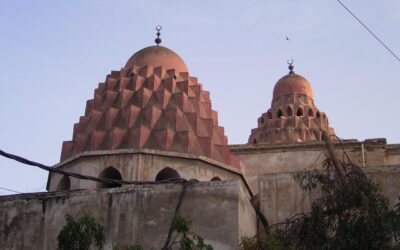
Mashlah (changing and relaxation hall): The large domed chamber near the entrance where bathers changed and relaxed. Its impressive Ottoman-period dome, supported by pendentives and illuminated through windows, is a later addition to the original building. The room features six alcoves arranged around a central octagonal pool.
-
Barrani (cold room): The cooler chamber through which visitors pass after leaving the changing hall. It allows the body to adjust before entering the warmer bathing areas.
-
Wastani (warm room): The intermediate bathing chamber, where visitors gradually become accustomed to the heat. Its domed ceiling and small openings allow light to filter into the interior.
-
Jawwani (hot room): The hottest bathing chamber, where steam circulates from the heating system. Bathers traditionally rested on stone benches while the heat and steam helped cleanse the body.
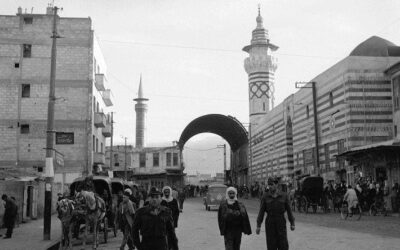
The hammam’s heating system was an important part of its design. Water was heated in large basins above a furnace, while hot water and steam were distributed through the building. Smoke from the furnace travelled through channels beneath the structure before escaping through a chimney.Hammam Nur al-Din continued serving the people of Damascus for centuries. During the early 20th century, however, it fell out of regular use and was converted into a warehouse for storing soap and spices. In 1979, a request was submitted to the Directorate General of Antiquities and Museums to restore the building and return it to its original function. Restoration work lasted approximately two years and included repairs to the dome of the changing hall.
-
- Today, Hammam Nur al-Din remains an important example of the traditional bathhouse culture of the Islamic world. Its survival and continued use make it especially significant: unlike many historic buildings that have become museums, it preserves the original purpose for which it was established nearly nine centuries ago. It stands as a lasting reminder of Nur al-Din’s contribution to the development of Damascus and the charitable institutions that supported everyday urban life.