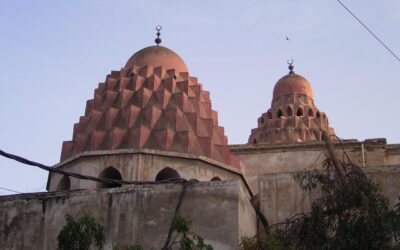
Grave of Habeel
How to Get Here
-
From Damascus: Travel northwest towards Al-Zabadani and the Wadi Barada Valley.
-
By car: Continue towards Souq Wadi Barada and follow the mountain road leading up to Nabi Habeel Musjid.
-
Final approach: The last section involves a narrow mountain road, so a suitable vehicle and an experienced local driver are advisable.
-
Public transport: Direct public transport to the shrine is not reliably documented. A private vehicle or locally arranged transport is preferable.
-
The Grave of Habeel is located within the Nabi Habeel Musjid, situated in the mountainous region above Wadi Barada, near Al-Zabadani in the Rif Dimashq Governorate of Syria. According to Islamic tradition, the site is believed to contain the resting place of Habeel (Habil), the son of Nabi Adam (عليه السلام), who was killed by his brother Qabeel (Qabil). The story of the two sons of Nabi Adam (عليه السلام) is mentioned in the Noble Qur’an in Surah Al-Ma’idah (5:27–31), describing how jealousy led to the first killing among mankind.
-
Habeel and Qabeel are the names traditionally associated with the two brothers in Islamic accounts. Their story teaches important lessons about sincerity, righteousness, jealousy and the consequences of wrongdoing. After the killing, Qabeel was shown by a crow how to bury the body of his brother, demonstrating the proper treatment of the deceased.
-
The location of Habeel’s grave is preserved through local religious tradition, and the shrine has become a place of visitation for Muslims and others interested in the religious history of the region. However, the identification of this particular site as Habeel’s actual burial place has not been independently established through historical or archaeological evidence.
-
The Musjid and shrine are situated on elevated mountain slopes overlooking the beautiful Barada Valley. The surrounding landscape consists of rugged mountains, valleys and settlements along the Barada River, giving the site a distinctive setting within the Syrian countryside.
-
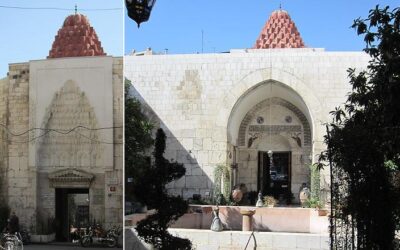
The present Ottoman-era structure is traditionally dated to 1599 CE and is associated with Ahmad Pasha ibn Ridwan, an Ottoman governor who commissioned its construction. The building features a prominent dome and traditional Islamic architectural elements. Inside is a long sarcophagus, approximately seven metres in length, covered with green cloth decorated with Qur’anic inscriptions.
-
The Musjid is also associated with a tradition of having forty Mihrabs, the prayer niches indicating the direction of the Qiblah. This feature has contributed to the site’s religious and architectural interest.
-
Over the centuries, the shrine has attracted visitors undertaking Ziyarah and those wishing to pay their respects at the traditionally attributed grave of Habeel. It is particularly significant within the religious traditions associated with the early history of mankind.
The Grave of Habeel should not be confused with the Cave of Blood on Mount Qasioun, which is also associated with the story of Habeel and Qabeel. According to another local tradition, the Cave of Blood is believed to be the place where the killing occurred, while the Nabi Habeel Musjid near Wadi Barada is traditionally identified as the place of burial. -
Today, Nabi Habeel Musjid remains an important religious and historical landmark in the mountains northwest of Damascus. Its association with the story of the two sons of Nabi Adam (عليه السلام), together with its Ottoman-era architecture and striking mountain surroundings, makes it a notable site in Syria’s Islamic heritage.