Nur al-Din Zangi Hospital (Bimaristan al-Nuri)
How to Get Here
-
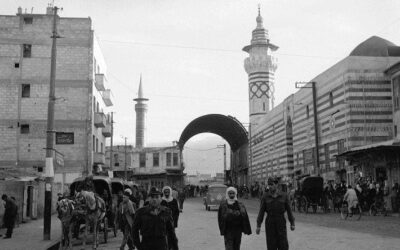
From the Great Umayyad Musjid: Walk towards the southern section of the Old City and the historic souq district.
-
From Souq al-Hamidiyah: Continue towards the Bzouriyah Souq area. The hospital is within walking distance.
-
By taxi: Ask for Bimaristan al-Nuri or the Museum of Medicine and Science in Old Damascus.
-
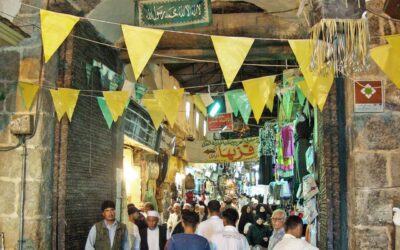
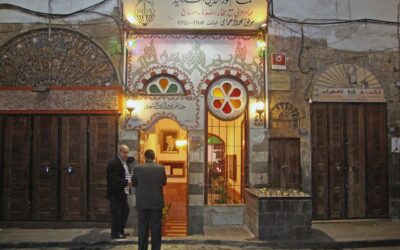
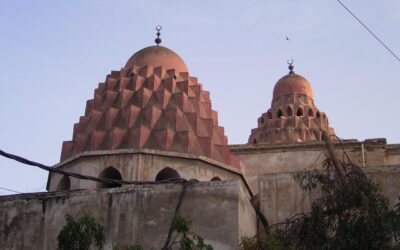
On foot: The historic building is situated within the traditional market streets of Damascus. Look for its distinctive decorated entrance and red-brick dome.
Nur al-Din Zangi Hospital (Bimaristan al-Nuri)
- Nur al-Din Zangi Hospital, known in Arabic as Bimaristan al-Nuri, is located in the historic Old City of Damascus, Syria, near the famous Souq al-Hamidiyah and the Great Umayyad Musjid. It is one of the most significant surviving examples of medieval Islamic medical architecture and represents the important contributions made by Muslim scholars and rulers to the development of medicine and healthcare.
- The hospital was established in 1154 CE (549 AH) by Nur al-Din Mahmud ibn Zangi, the renowned Zangid ruler of Syria. Nur al-Din was widely recognised for his commitment to Islamic governance, religious institutions, charitable works and the advancement of education. His patronage extended beyond Musjids and Madrasas to include hospitals and other public facilities intended to serve the needs of society.
- The institution was established as a Bimaristan, a Persian-derived term referring to a hospital or place of care for the sick. During the medieval Islamic period, Bimaristans played an important role in providing organised medical treatment, supporting physicians and training students in the medical sciences.
Nur al-Din’s hospital functioned as both a medical treatment centre and an educational institution. Patients received care while aspiring physicians studied medical knowledge and gained practical experience. The hospital was supported through charitable endowments (Awqaf), helping provide healthcare as a public service rather than making treatment dependent solely on a patient’s ability to pay. - The establishment of the hospital was an important development in the history of medicine in Damascus. Although hospitals existed in the Islamic world before its construction, Bimaristan al-Nuri became particularly renowned for its organisation, architecture and medical teaching. It was also admired by the Andalusian traveller Ibn Jubayr, who visited Damascus during the twelfth century and recorded the institution’s reputation and the work of its physicians.
The building follows a traditional four-Iwan courtyard design, with vaulted halls arranged around a central open courtyard. Each Iwan served a particular institutional purpose, while adjoining rooms provided additional facilities. The central courtyard contains a water basin, which contributed to the peaceful atmosphere of the hospital.
One of the most striking architectural features is its monumental entrance, decorated with intricate Muqarnas stonework. The entrance incorporates finely carved architectural details and an elaborate horseshoe-shaped arch. The building also features a distinctive red-brick Muqarnas dome, traditional stonework and decorative inscriptions. - The eastern Iwan was particularly important as a space for medical instruction, meetings and lectures. Historical architectural studies also identify built-in storage spaces within its walls that were used for keeping medical books and manuscripts. These facilities reflect the institution’s role as a centre of medical learning.
The hospital underwent subsequent extensions and restoration. In approximately 1242 CE, a physician named Badr al-Din added further facilities to accommodate additional patients. Restoration work was also undertaken during the Mamluk period, including repairs recorded in 1283 CE. - Bimaristan al-Nuri continued to serve the people of Damascus for several centuries. It eventually ceased functioning as a hospital during the early twentieth century, when modern medical facilities replaced the traditional institution.
- In 1975, the historic building underwent restoration and was adapted for museum use. It subsequently became home to the Museum of Medicine and Science in the Arab World, preserving the history of medical knowledge and scientific achievements in Islamic civilisation.
- The museum displays historical medical instruments, manuscripts and objects associated with the development of medicine. Its exhibitions highlight the contributions of Muslim physicians, pharmacists and scholars, as well as the sophisticated healthcare institutions that existed during the medieval Islamic period.
- Today, Nur al-Din Zangi Hospital remains an important landmark in the history of Islamic medicine. Its surviving architecture and transformation into a museum preserve the legacy of an institution that combined medical treatment, education and charitable service. It stands as a lasting reminder of the contributions made by Muslim civilization to the development of organized healthcare and medical knowledge.