Jami an-Nuri
How to Get Here:
Jāmiʿ an-Nūrī is located in the historic centre of Hama, close to the Orontes River and the famous wooden waterwheels (Norias).
-
From central Hama, head towards the historic riverside district.
-
The Musjid is situated near the Kilaniyeh Bridge and the historic Norias.
-
Jāmiʿ an-Nūrī (جامع النوري), also known as the Nur al-Din Musjid, is one of the historically significant Islamic religious landmarks in Hama, Syria. The Musjid was established during the 12th century under the patronage of Nur al-Din Mahmud ibn Zangi, the renowned Muslim ruler of the Zengid dynasty, who played an important role in the political, military and religious development of Syria.
Nur al-Din Zangi (1118–1174 CE) was among the most influential Muslim rulers of his time. He was particularly remembered for his commitment to strengthening Islamic institutions, establishing Madrasas, supporting scholars and constructing religious buildings throughout his territories. His patronage contributed greatly to the architectural and religious development of cities such as Damascus, Aleppo and Hama.
The Musjid was founded around 1134–1135 CE (529 AH), although later construction and alterations took place during subsequent periods. Its establishment formed part of the wider programme of religious and architectural development undertaken during Nur al-Din’s rule.
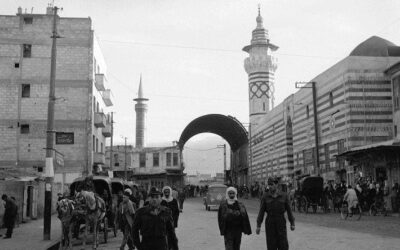
One of the most distinctive features of Jāmiʿ an-Nūrī is its square minaret, constructed using alternating layers of dark basalt and lighter limestone. This contrasting stonework gives the minaret a particularly recognisable appearance and reflects the architectural traditions of medieval Syria.
The Musjid’s architectural features include:-
Square Minaret: A distinctive structure featuring alternating black basalt and yellow limestone, making it one of the most recognisable features of the Musjid.
-
Central Courtyard: A large rectangular courtyard surrounded by covered arcades and adjoining rooms.
-
Central Water Basin: A square pool situated within the courtyard, contributing to the traditional arrangement of the building.
-
Prayer Hall: Located along the southern side of the courtyard, providing the main congregational prayer space.
-
Domed Chambers: A series of covered spaces and domed sections along the eastern side of the courtyard, overlooking the river.
The Musjid is also particularly associated with its historic wooden minbar, renowned for its intricate craftsmanship and decorative carving. The minbar is an important example of medieval Islamic woodworking and reflects the artistic traditions of the Zengid period. Historical records describe it as one of the oldest preserved examples associated with the Musjid, although its present location and condition should be verified.
Over the centuries, Jāmiʿ an-Nūrī underwent various modifications and restorations while retaining much of its distinctive medieval character. Its architecture reflects the development of Islamic religious buildings in Syria during the Zengid period and provides an important connection to the architectural legacy of Nur al-Din.
Today, Jāmiʿan-Nūrī remains an important part of Hama’s Islamic heritage and is closely associated with the city’s historic riverside landscape. Its proximity to the famous Norias of Hama makes it one of the notable landmarks within the city’s historic centre.
-