Tomb of Al-Asma’i
How to get here:
The shrine is located in the Jobar neighbourhood, northeast of central Damascus, within the wider historical Ghouta region. From central Damascus, travel towards Jobar and use the Google Maps pin to locate the tomb. The final approach may require local guidance
-
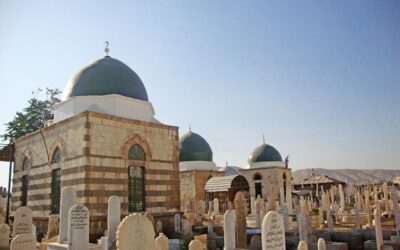
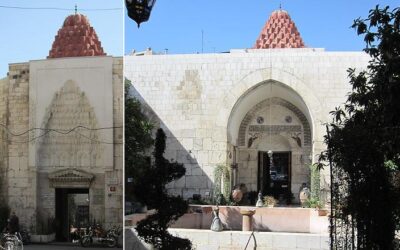
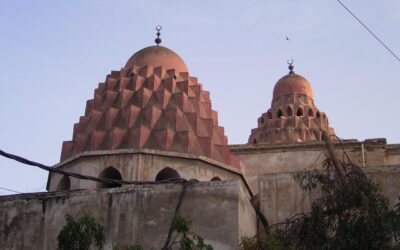
The Tomb of Al-Asma’i (قبر الأصمعي) is a small Islamic shrine located in the Jobar neighbourhood of Damascus, Syria, in the wider Ghouta region. The site is traditionally attributed to Abu Sa’id Abd al-Malik ibn Qurayb al-Asma’i, one of the most celebrated Arabic linguists, philologists and scholars of the Abbasid period.
Al-Asma’i was born in Basra, Iraq, around 740 CE and became renowned for his extraordinary knowledge of classical Arabic, poetry, grammar, literature and the traditions of the Arab tribes. He was among the leading scholars of the Basran school of Arabic philology and played an important role in preserving the language and literary heritage of early Arabia.
During the Abbasid period, Al-Asma’i became associated with the court of Caliph Harun al-Rashid in Baghdad, where his knowledge and scholarly abilities earned him considerable recognition. He was also known for his close association with the study of Arabic poetry and for collecting linguistic expressions and accounts directly from the Bedouin tribes.
Among his well-known works are:-
Al-Asma’iyyat – A celebrated collection of classical Arabic poetry.
-
Fuhulat al-Shu’ara – A work discussing the standing and excellence of Arab poets.
-
Kitab al-Khayl – A work concerning horses and their characteristics.
-
Kitab al-Ibil – A work concerning camels.
-
Kitab al-Wuhush – A work concerning wild animals.
Al-Asma’i’s contribution to Arabic scholarship was significant, particularly in preserving classical vocabulary, poetry and linguistic traditions. His writings and transmitted knowledge continued to influence generations of Arabic scholars.
The shrine in Jobar preserves a local tradition associating the area with this distinguished scholar. However, the identification of the grave is not historically established. Classical biographical accounts generally place Al-Asma’i’s death in Basra, Iraq, around 828 CE, rather than Damascus. Consequently, the tomb should be described as a grave traditionally attributed to him rather than a conclusively authenticated burial place.
Despite the uncertainty surrounding the attribution, the site remains an interesting part of the religious and historical heritage associated with the Damascus and Ghouta region.
-